
Rummy Culture Game: How a Simple Card Game Turned Into a Digital Social Phenomenon
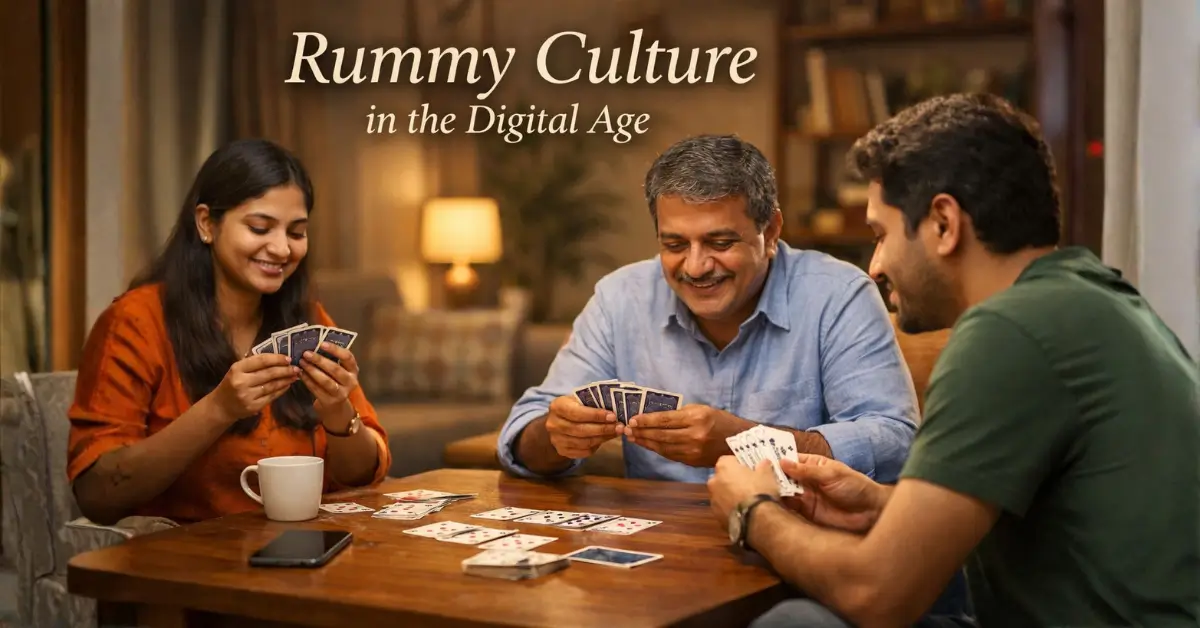
If you grew up in India or Southeast Asia, chances are you have seen rummy played somewhere familiar. A living room floor. A quiet office break. A long evening with cards spread across the table and opinions flying just as freely. Those moments matter, because rummy was never only about cards. It was about time, people, and routine. The game fit into life instead of trying to take it over. Then smartphones arrived, and the setting changed. What many people now refer to as the rummy culture game is not a new rulebook or a single platform. It is the result of rummy moving from shared physical spaces into digital ones, and how player behavior shifted along the way. Understanding that shift matters more than understanding the game itself.

Rummy Culture Is Not a Game, It’s an Ecosystem

One of the most common misunderstandings around rummy culture is treating it as a product. It is not. Rummy is the game. Apps are delivery systems. Culture is everything that forms around repeated play. Culture includes habits, expectations, social norms, and emotional patterns. Offline, rummy culture moved at a human pace. People paused. They talked. They stopped when the moment passed. Online, the structure changed. Sessions became shorter but more frequent. Play became scheduled instead of spontaneous. Social interaction turned quieter, often replaced by interfaces and notifications. None of this is inherently negative. It simply reshaped how people experience the same game. That distinction is easy to miss, and important to keep in mind.

Where Rummy Culture Really Began

Before apps and screens, rummy lived comfortably in everyday life. Families played during festivals. Friends played during travel. Colleagues played during long breaks, often with unwritten rules that mattered more than the cards. Don’t rush the game. Keep it friendly. Know when to stop. Those informal boundaries shaped how rummy felt. The game rewarded attention and patience, not noise or aggression. That quiet competitiveness is why rummy endured while other card games faded. Digital platforms did not invent rummy culture. They inherited it. Whether they preserved it is a different question.

A Short Primer on the Game Itself

At its core, rummy asks players to organize cards into valid sets and sequences while paying attention to what others discard. Good players observe patterns. Stronger players manage uncertainty. Experienced players know when not to force a hand. Chance always plays a role. Cards arrive randomly. Outcomes vary. Skill influences decisions, not guarantees. For readers who want more structure, understanding how Indian rummy is typically structured can provide useful context around why the game translates so naturally into both offline and online environments. That foundation explains rummy’s long-term appeal without overselling what the game can or cannot offer.

Why Online Rummy Feels More Intense Than Offline Play

This is where the biggest behavioral shift occurred. Online rummy removes friction. No shuffling. No pauses. No natural breaks for conversation or reflection. Games move faster. Feedback arrives instantly. Sessions can stretch longer than intended because nothing forces them to end. This speed changes how people feel while playing. Decision fatigue sets in sooner. Emotions compress. Wins and losses carry more immediate weight. Studies examining research on online gaming behavior in India have noted that faster game cycles and reduced natural breaks can increase intensity and mental load over time, especially in app-based environments where play is self-regulated. Offline rummy slowed people down by default. Online rummy requires players to slow themselves down. Many people underestimate that difference until they experience it firsthand.

How Rummy Became a Digital Growth Story

Rummy’s move online followed a familiar pattern. Smartphones became accessible. Internet access expanded. Players gravitated toward games they already understood. Rummy fit naturally into that environment. Platforms introduced structured formats, time-based rounds, and competitive systems that scaled quickly. Industry reports often highlight user growth and participation numbers. Those figures show interest, but they do not tell the full story. Growth alone does not explain sustainability. It also does not reflect how players feel over time. That gap between numbers and experience is where most discussions stop short.

The RummyCulture Case, Scale and Its Limits

RummyCulture became widely known for hosting large-scale tournaments and achieving record participation. For a time, it symbolized how far online rummy could reach. Then, in late 2025, the platform shut down. There was no dramatic collapse. Just a clear reminder that size does not equal permanence. For players, this highlights an often overlooked reality. Digital platforms operate within economic, regulatory, and operational constraints. Even popular services can change or disappear. Rummy culture today includes that awareness, whether spoken aloud or not.

Skill Versus Chance, A More Practical View

Rummy rewards skill in meaningful ways. Memory, observation, and decision-making influence outcomes over repeated play. Still, chance never leaves the table. Card distribution varies. Opponent behavior varies. Context matters. The healthiest way to view rummy is not as a guarantee of outcomes, but as a game where skill shapes decisions while uncertainty remains. For those interested in developing awareness rather than outcomes, exploring basic rummy decision-making tips can help frame the game around thoughtful play instead of expectations. Recognizing limits is not pessimism. It is realism.

Regulation and Why It Changed the Conversation

As online rummy expanded, attention followed. Not just from players, but from policymakers and regulators. Concerns centered on consumer protection, payment systems, advertising practices, and long-term impact. Different regions responded in different ways, creating an uneven landscape. For players, this environment introduces uncertainty. Platform rules change. Access changes. Features adjust. Staying informed matters more than predicting outcomes. Awareness reduces surprises. Ignoring the policy layer no longer makes sense.

How to Evaluate a Rummy Platform Thoughtfully

Choosing a platform based only on popularity is common, but not always wise. A more grounded approach looks at clarity and transparency. Are rules explained plainly? Are terms easy to find? Does support communicate consistently? Are limits available and functional? Reliable platforms tend to communicate openly. Unreliable ones rely on distraction. Trust builds slowly and erodes quickly. Paying attention early saves effort later.

Responsible Participation Is Part of Modern Rummy Culture

Responsible play is not an add-on. It is part of how rummy culture matured. Healthy participation includes boundaries. Time awareness. Emotional check-ins. When the game stops feeling light, that signal matters. Not because something is wrong, but because balance shifted. Rummy works best when it stays in its lane, as recreation, not pressure. That mindset protects both enjoyment and perspective.

Where Rummy Culture Appears to Be Heading

The future of rummy culture likely looks quieter. More focus on smaller communities. More emphasis on transparency. More attention to player well-being. Massive scale is not the only measure of success anymore. Sustainability and trust matter more. Games that last adapt slowly and thoughtfully. Rummy has done that before.

Final Thoughts

The rummy culture game is not about chasing outcomes or platforms. It is about understanding how a familiar game evolved alongside technology and how player behavior adapted with it. Some changes added convenience. Others introduced complexity. All of them reshaped expectations. At topyonogames.com, the goal is to help readers see beyond surfaces. To understand context. To recognize patterns. To approach games with clarity rather than assumptions. If you play rummy, play with awareness. If you read about rummy, read critically. And if something feels off, trust that instinct. That perspective keeps games enjoyable, grounded, and worth returning to.

Note: 

This piece explores rummy culture from a cultural, behavioral, and digital perspective. It is intended for general information and awareness, not promotion of real-money play.  

Frequently Asked Questions About Rummy Culture Game

1. What does “rummy culture game” actually mean?

The term “rummy culture game” refers to how rummy fits into social habits, routines, and digital spaces, not a specific app or way to earn money. It describes how people play rummy, why they play it, and how the experience has evolved from home settings to online environments over time.

2. Is rummy considered a skill game in India?

Rummy is widely discussed as a game that involves skill because players make decisions based on memory, observation, and planning. At the same time, chance still plays a role through card distribution. Legal treatment and interpretation can vary by region, so context always matters.

3. Why did online rummy become popular in India?

Online rummy gained popularity because it was already familiar to many players, easy to learn, and accessible through smartphones. The digital format allowed people to play short sessions at their convenience, which matched changing lifestyles and increased internet access across India.

4. Is online rummy the same experience as playing rummy at home?

No. Offline rummy tends to be slower and more social, with natural breaks and conversation. Online rummy usually moves faster, with shorter rounds and fewer pauses. This difference can change how players feel during play, even though the core rules remain similar.

5. What happened to platforms like RummyCulture?

Some large rummy platforms closed due to a mix of regulatory changes, business sustainability challenges, and shifting market conditions. These closures show that popularity alone does not guarantee long-term stability in the online gaming space.

6. Can rummy be played responsibly online?

Yes, responsible participation is possible when players set clear time limits, stay aware of emotional triggers, and treat rummy as entertainment rather than an outcome-focused activity. Many players benefit from taking regular breaks and avoiding extended, unplanned sessions.

7. Does playing rummy regularly improve skill?

Regular play can improve pattern recognition, decision-making, and familiarity with the game. However, outcomes still vary because chance is always involved. Skill helps players make better choices, but it does not remove uncertainty from the game.

8. Is rummy culture declining or evolving?

Rummy culture appears to be evolving rather than declining. The trend is moving toward smaller communities, greater awareness of player well-being, and more cautious participation shaped by regulation and user experience rather than rapid expansion.

9. Are there risks associated with online rummy culture?

Potential risks include time overuse, mental fatigue, and stress if play becomes unbalanced. These risks are not unique to rummy and can be reduced through awareness, moderation, and recognizing when the game stops feeling enjoyable.

10. How should new players approach rummy culture today?

New players benefit from first learning the game calmly, understanding its cultural context, and approaching play with realistic expectations. Treating rummy as a recreational activity, rather than focusing on results, helps keep the experience healthy and enjoyable.

Frequently Asked Questions About Rummy Culture Game

1. What does “rummy culture game” actually mean?

The term “rummy culture game” refers to how rummy fits into social habits, routines, and digital spaces, not a specific app or way to earn money. It describes how people play rummy, why they play it, and how the experience has evolved from home settings to online environments over time.  

2. Is rummy considered a skill game in India?

Rummy is widely discussed as a game that involves skill because players make decisions based on memory, observation, and planning. At the same time, chance still plays a role through card distribution. Legal treatment and interpretation can vary by region, so context always matters.  

3. Why did online rummy become popular in India?

Online rummy gained popularity because it was already familiar to many players, easy to learn, and accessible through smartphones. The digital format allowed people to play short sessions at their convenience, which matched changing lifestyles and increased internet access across India.  

4. Is online rummy the same experience as playing rummy at home?

No. Offline rummy tends to be slower and more social, with natural breaks and conversation. Online rummy usually moves faster, with shorter rounds and fewer pauses. This difference can change how players feel during play, even though the core rules remain similar.  

5. What happened to platforms like RummyCulture?

Some large rummy platforms closed due to a mix of regulatory changes, business sustainability challenges, and shifting market conditions. These closures show that popularity alone does not guarantee long-term stability in the online gaming space.  

6. Can rummy be played responsibly online?

Yes, responsible participation is possible when players set clear time limits, stay aware of emotional triggers, and treat rummy as entertainment rather than an outcome-focused activity. Many players benefit from taking regular breaks and avoiding extended, unplanned sessions.  

7. Does playing rummy regularly improve skill?

Regular play can improve pattern recognition, decision-making, and familiarity with the game. However, outcomes still vary because chance is always involved. Skill helps players make better choices, but it does not remove uncertainty from the game.  

8. Is rummy culture declining or evolving?

Rummy culture appears to be evolving rather than declining. The trend is moving toward smaller communities, greater awareness of player well-being, and more cautious participation shaped by regulation and user experience rather than rapid expansion.  

9. Are there risks associated with online rummy culture?

Potential risks include time overuse, mental fatigue, and stress if play becomes unbalanced. These risks are not unique to rummy and can be reduced through awareness, moderation, and recognizing when the game stops feeling enjoyable.  

10. How should new players approach rummy culture today?

New players benefit from first learning the game calmly, understanding its cultural context, and approaching play with realistic expectations. Treating rummy as a recreational activity, rather than focusing on results, helps keep the experience healthy and enjoyable.