
Understanding the Structure of Skill-Based Gaming Communities in India

Skill-based gaming in India has grown beyond standalone mobile apps. While many users begin by playing directly on gaming platforms, a growing number now participate through structured gaming communities that offer guidance, verification, and long-term engagement.This shift reflects broader changes in how digital gaming ecosystems operate. As engagement models evolve and moderation systems become more sophisticated, understanding the framework behind user interaction has become just as important as understanding the games themselves.This article explains how skill-based gaming communities operate in India, how they differ from direct gaming apps, and what users should consider before engaging with any network or group.
Pro Tip:
Academic research suggests that the social dimension of gaming communities — where users discuss strategy, share experiences, and influence one another’s participation — is an important behavioral factor that can affect not only engagement but also how users perceive and respond to gaming incentives over time.Study Reference:
“The Role of Virtual Communities in Gambling and Gaming Behaviors: A Systematic Review,” PubMed Central — https://www.ncbi.nlm.nih.gov/pmc/articles/PMC7882555/
What Are Skill-Based Gaming Communities?
A skill-based gaming community is an organized ecosystem where players participate in legally recognized skill games through agents, groups, or networks rather than operating independently.These communities often introduce:- Verified onboarding
- Moderated participation
- Clear usage rules
- Ongoing guidance and support
Skill-Based Games vs Games of Chance in India
In India, skill-based games are legally differentiated from games of chance. Industry bodies such as the All India Gaming Federation consistently emphasize that outcomes in skill-based games depend primarily on a player’s knowledge, strategy, and decision-making rather than randomness alone.This distinction has shaped how platforms and communities design their systems, ensuring compliance with state-level regulations and judicial interpretations.Why Gaming Communities Are Growing Among Indian Users
Several practical factors explain the rise of community-driven gaming participation:1. Trust Through Human Verification
Many users prefer interacting with a known agent or moderator instead of navigating platforms alone.2. Regional Accessibility
Communities often operate in local languages and adapt to regional preferences, particularly in Tier-2 and Tier-3 cities.3. Clear Participation Rules
Structured communities usually define participation boundaries clearly, reducing misunderstandings related to balances, withdrawals, or eligibility.4. Sustainable Engagement
Unlike promotion-heavy models, communities focus on steady participation rather than rapid onboarding.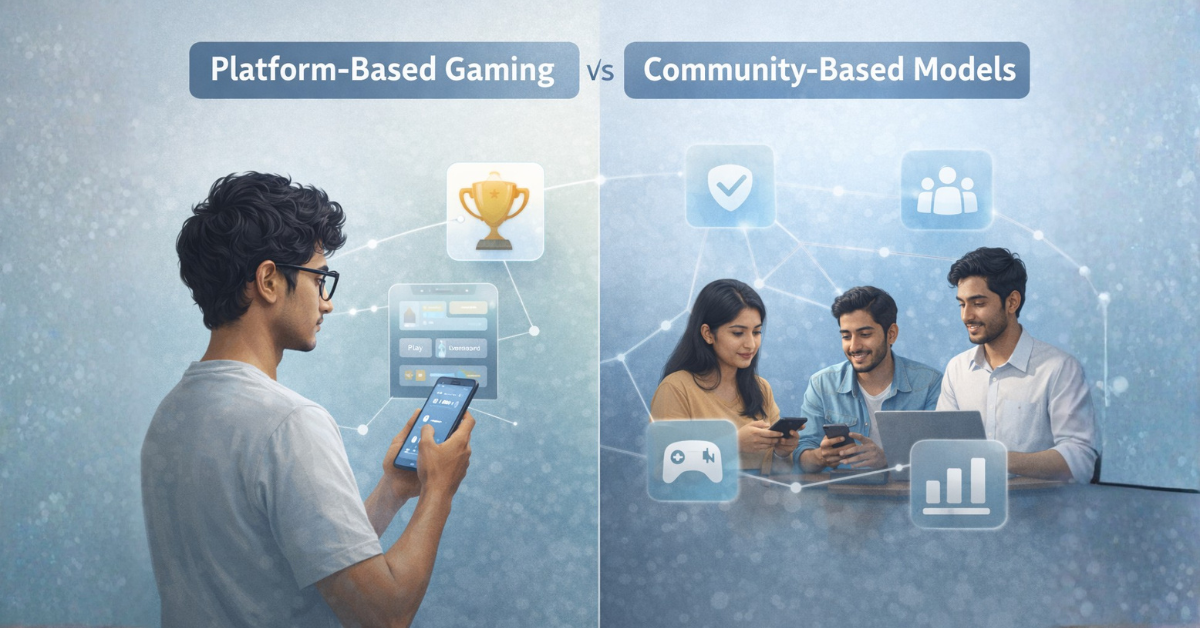
Platform-Based Gaming vs Community-Based Models
Skill-based gaming in India generally follows two broad participation models.Platform-Based Gaming Apps
Standalone apps such as RummyCircle and Junglee Rummy allow users to register, play, and manage activities directly through the application. This model suits independent users who prefer self-managed gameplay without external coordination.Community or Network-Based Participation
In contrast, community-based models focus on structured onboarding, agent verification, and guided participation. These networks operate independently of individual gaming apps and emphasize transparency, moderation, and responsible engagement.Key Differences at a Glance
Understanding core differences between gaming apps and gaming communities helps clarify why users behave differently and why communities often result in sustained engagement and support.Research Context: Academic studies on online gaming and gambling communities indicate that virtual gaming communities — including structured forums and in-game social interactions — play a significant role in shaping user behaviours, social influence, and participation norms. Specifically, research shows that interaction within gaming communities influences engagement patterns, social norms, and user retention more strongly than isolated gameplay alone.| Aspect | Gaming Apps | Gaming Communities |
| Access | App registration | Agent or group onboarding |
| Support | Platform-based | Human-assisted |
| Structure | Individual | Moderated network |
| Growth | Promotion-driven | Relationship-driven |
| Transparency | Platform rules | Community guidance |
How AI and Data Signals Are Reshaping Skill-Based Gaming Communities
As skill-based gaming ecosystems scale, many platforms and communities increasingly rely on AI-assisted analysis and behavioral data signals to manage participation responsibly.Rather than focusing solely on outcomes, modern systems evaluate patterns such as:- Frequency and consistency of participation
- Behavioral deviations over time
- Interaction history within platforms or communities
- Anomalies that may indicate misuse or automated activity
- Identify unusual behavior early
- Maintain fair participation standards
- Reduce misinformation and misuse
- Preserve long-term trust within the network
Example of an Agent-Based Skill Gaming Network
One example of an agent-based skill gaming community structure is the YONO Agency Network model. This type of network:- Operates through verified agents rather than mass signups
- Does not require deposits to join the network itself
- Focuses on skill-based participation and structured growth
- Maintains discretion and controlled visibility
What Users Should Verify Before Joining Any Community
Before engaging with any skill-based gaming community, users should check:- Clear explanation of skill-based mechanics
- No guarantees or income promises
- Transparent communication channels
- Defined participation rules
- Separation between community access and gameplay platforms
Final Thoughts
Skill-based gaming communities are increasingly shaping how Indian users engage with digital gaming ecosystems. When designed responsibly, they offer structure, transparency, and context that extend beyond standalone app experiences.At topyonogames.com, the focus remains on observing these developments objectively—examining how participation models, moderation practices, and data-driven systems evolve over time. For readers, understanding how communities operate is more valuable than choosing any specific platform, enabling safer and more informed participation as the ecosystem continues to mature.FAQs
1. What are skill-based gaming models in India?
Skill-based gaming models in India refer to structured ways players participate in games where outcomes depend primarily on skill, strategy, and decision-making rather than chance. These models include app-based platforms, community-driven participation, and network-based systems.2. How are skill-based games different from gambling?
Skill-based games rely on player ability, while gambling depends largely on chance. In India, this distinction matters legally, as courts have consistently treated skill-based games differently from games of chance.3. What is the difference between platform-based gaming and community-based gaming?
Platform-based gaming involves individual users interacting directly with an app, while community-based gaming adds human layers such as agents, groups, or moderators. Communities often focus more on guidance, structure, and long-term engagement.4. Are skill-based gaming communities legal in India?
Skill-based gaming communities are generally legal if they operate around games classified as skill-based and follow applicable state regulations. Legality can vary by state, so users should always understand local rules.5. Why are gaming communities becoming popular among Indian users?
Many Indian users prefer gaming communities because they offer trust, human guidance, and clearer participation rules. This is especially common in Tier-2 and Tier-3 cities, where peer-led participation feels safer than navigating platforms alone.6. How do gaming communities manage trust and moderation?
Most structured gaming communities rely on moderation systems that combine human oversight with data-based monitoring. These systems help identify misuse, enforce rules, and maintain fair participation standards.7. Do skill-based gaming models use artificial intelligence?
Yes, many modern skill-based gaming models use AI-assisted systems to monitor behavior patterns, detect anomalies, and support moderation decisions. AI typically works alongside human judgment rather than replacing it.8. What should users check before joining a skill-based gaming community?
Users should check whether the games are skill-based, understand participation rules, and avoid communities that promise guaranteed outcomes. Transparency and clarity are stronger indicators of credibility than promotions.9. Is community-based gaming safer than using gaming apps alone?
Neither model is inherently safer; safety depends on how responsibly the system is structured and managed. Well-moderated communities can reduce confusion, while poorly run ones can increase risk.10. How do skill-based gaming models affect long-term player behavior?
Skill-based gaming models influence how players engage over time, including consistency, risk awareness, and decision-making habits. Structured models that emphasize transparency and moderation tend to encourage more sustainable participation than promotion-driven systems.Disclaimer
This content is published for informational and educational purposes only. It does not promote or recommend any specific gaming platform, community, or participation model. Readers are encouraged to understand applicable local regulations and make independent decisions based on their own judgment.