
How YONO Expanded Beyond Banking in India
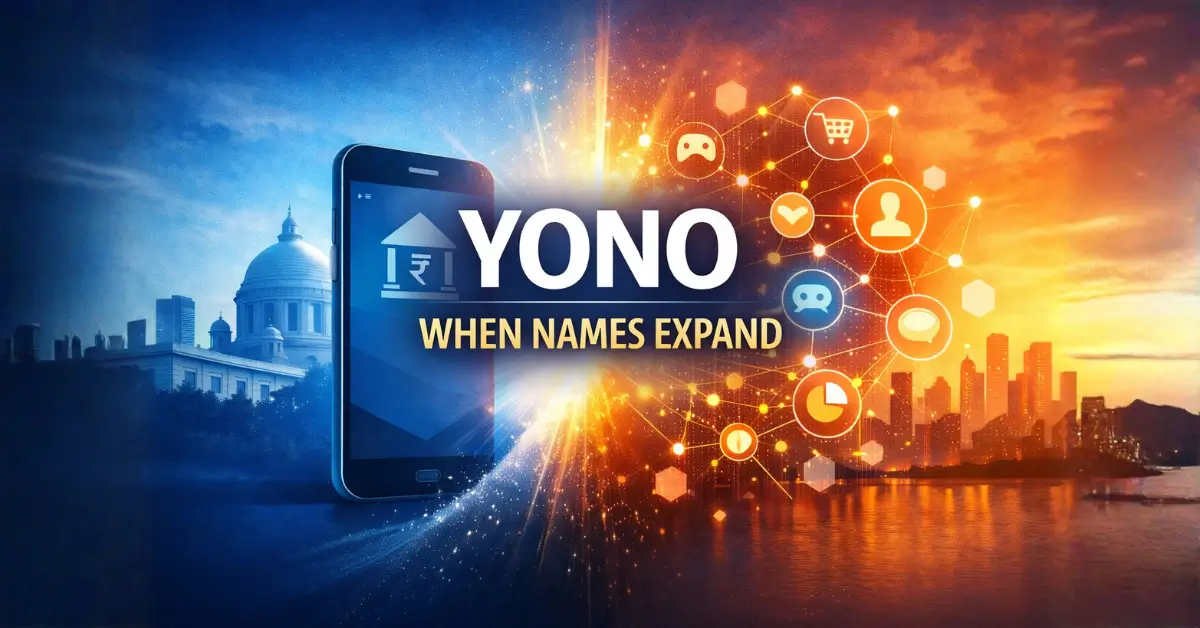
YONO did not start as a broad digital term.It began inside a structured environment. The name was introduced by State Bank of India through its digital platform SBI YONO. The acronym stood for “You Only Need One.” The goal was simple. Consolidate financial services into a single mobile experience.Clear origin. Clear industry. Clear purpose.Over time, however, the term began appearing outside banking.Understanding how YONO moved beyond banking in India helps explain why the same word can now carry layered meanings across digital platforms. 

Key Insights at a Glance

  • YONO began as a structured banking brand but entered broader digital vocabulary through repeated visibility. 
  • Digital terms often expand beyond their original industry once familiarity lowers friction. 
  • Shared naming does not imply shared ownership. Structure matters more than vocabulary. 
  • Recognizing expansion patterns early helps prevent confusion in fast-moving markets.
 

The Lifecycle of a Digital Brand Name

Most digital brands follow a pattern.They launch within a defined industry. Adoption grows. Visibility increases. Familiarity builds. After enough repetition, the name begins to stretch beyond its original boundaries.YONO followed this pattern.When a term becomes widely recognized, it can shift from being a brand identifier to becoming part of public vocabulary. That is when expansion begins.This pattern repeats across India’s fast-moving digital ecosystem. 

The Original Banking Context

At launch, YONO operated within a regulated banking framework.It connected users to structured financial services. The message behind the name emphasized consolidation. One ecosystem. One digital entry point.That clarity matters.When a term has a defined starting point, you can track how far it travels. In this case, the expansion became visible as digital adoption accelerated. 

When Visibility Creates Spillover

Digital exposure accelerates familiarity.The more often people encounter a term, the less tightly it feels attached to its origin. Repetition reduces friction. A name that once felt specific begins to feel adaptable.In India’s mobile-first economy, short English acronyms scale quickly. They are memorable and flexible.That combination encourages spillover.Spillover reflects visibility, not ownership transfer.This digital expansion of YONO beyond banking reflects a broader shift in India’s app ecosystem, where familiarity often travels faster than structure. 

When a Term Becomes Larger Than Its Origin

At some point, a brand name can enter ecosystem territory.It no longer signals one specific service. It carries layered meaning shaped by usage.The original identity remains intact. It simply shares space with broader interpretations.This expansion brings advantages and risks at the same time.

The Impact of a Brand Expanding Beyond Its Original Industry

AspectAdvantagesRisks
FamiliarityBuilds quick recognition and lowers hesitationEncourages assumptions about affiliation
VisibilityIncreases reach across marketsBlurs contextual boundaries
Naming EfficiencyMakes adoption easier for new entrantsWeakens clarity around origin
Cultural PresenceEmbeds the term into public vocabularyPromotes surface-level evaluation
Expansion itself is neutral. Interpretation determines outcome. 

Naming Convergence in India’s App Economy

India’s digital market rewards speed and simplicity.Short names scale faster. Familiar words reduce barriers. Developers often choose terms that feel established because recognition lowers friction.This creates naming convergence across industries.Overlap does not equal linkage.It reflects competitive digital dynamics, not automatic affiliation. 

Why Meaning and Ownership Drift Apart

Language evolves quickly.A term can move into new contexts without changing its original ownership. Meaning expands. Legal control remains classification-based.That separation matters.Commercial naming theory explains that widely used brand terms can lose distinctiveness over time through processes related to the trademark dilution and generic trademarks.Vocabulary alone cannot determine affiliation. Structural and legal classification define ownership boundaries.If you want a clear breakdown of the structural differences between SBI YONO and independent platforms using similar naming, you can review our detailed comparison of SBI YONO and YONO-style platforms.Understanding those distinctions reinforces why naming similarity should never be treated as proof of connection. 

The Psychology of Familiar Terms

Familiarity feels efficient.The brain prefers what it recognizes. Repetition builds comfort. Comfort accelerates action.This is not speculation. Research on decision-making supports the idea that cognitive fluency influences perception and judgment. Studies indexed by PubMed on research on cognitive fluency and familiarity assessment show that familiar stimuli are often processed as more trustworthy or credible.In digital markets, repeated exposure strengthens that effect.The issue arises when recognition replaces evaluation.Clarity requires intention. Familiarity happens automatically. 

How to Recognize When a Digital Term Is Entering Expansion Phase

Expansion does not happen randomly.Certain signals appear.The term begins showing up in varied contexts. Discussions become less industry-specific. The name is used without explanation because familiarity is assumed.At that stage, structural evaluation becomes more important than surface recognition.Recognizing expansion early helps you interpret platforms with clarity instead of assumption.That awareness applies well beyond one acronym. 

How to Evaluate Digital Terms That Cross Industries

When a term spans multiple contexts, slow the process down.Check ownership. Confirm industry classification. Review regulatory alignment. Look for transparent disclosure.Structure defines legitimacy. Labels influence perception.Keeping those separate preserves clarity. 

Why Structural Thinking Outlasts Naming Trends

Digital markets will continue to produce familiar names that stretch across categories.Some will expand quickly. Others will fade. The pattern will remain.The expansion of YONO beyond banking illustrates how visibility transforms language. It also reinforces a larger principle.Names evolve. Structures endure.When evaluation focuses on framework instead of vocabulary, interpretation becomes grounded rather than reactive.In fast-moving digital ecosystems, grounded interpretation becomes a long-term advantage. 

Frequently Asked Questions

1. Why do digital terms spread across industries?

Digital terms spread when visibility increases and familiarity reduces friction. Once a name becomes widely recognized, it often moves beyond its original category into broader cultural use. 

2. Does name similarity indicate ownership?

No. Similar naming does not automatically imply shared ownership or affiliation. Ownership depends on the operator and industry classification, not vocabulary alone. 

3. Can the same term appear in different digital contexts?

Yes. A term can originate in one industry and later appear in unrelated sectors as part of broader naming trends. Context determines meaning. 

4. How can users distinguish brand origin from brand usage?

Check who operates the platform, which industry governs it, and what regulatory framework applies. Structure reveals origin more reliably than name familiarity. 

5. Why is structural evaluation more important than terminology?

Terminology influences perception, but structure defines reality. Ownership, regulatory alignment, and operational context provide clearer signals than branding alone. 

About the Author

Aman Kumar is a content strategist and gaming research writer at TopYonoGames. He studies how digital platforms operate, how naming trends influence perception, and how users can separate structure from surface familiarity. His work centers on clarity, responsible evaluation, and long-term transparency in fast-moving online markets.This article reflects independent analysis. TopYonoGames is not affiliated with SBI or any banking institution.